Préparation du lecteur…
Si la lecture ne fonctionne pas, rechargez le lecteur ou ouvrez-le directement.
Choisir un épisode
La rosa de Guadalupe
Synopsis
Aucun synopsis disponible.
Recommandé pour vous

Mistreated by the Narváez family, the poor and innocent Maricruz is humiliated, abandoned, and imprisoned, losing everything. Upon discovering her true origins, she transforms into a wealthy and powerful woman. Driven by grief and the loss of her father, she vows revenge against everyone who made her suffer.
Wild at Heart

The story of Renata Flores del Angel, a young woman from a wealthy family who falls for Pablo Ramos, the foreman of her father's estate.
Ask God For Forgiveness... Not Me

Esmeralda is a telenovela that was released by Televisa in 1997. It is a remake of a 1970 Venezuelan telenovela of that same name, and was itself remade in Brazil in 2004. Another version is Topacio from Venezuela in 1984. One of the most famous telenovela all the time.
Esmeralda
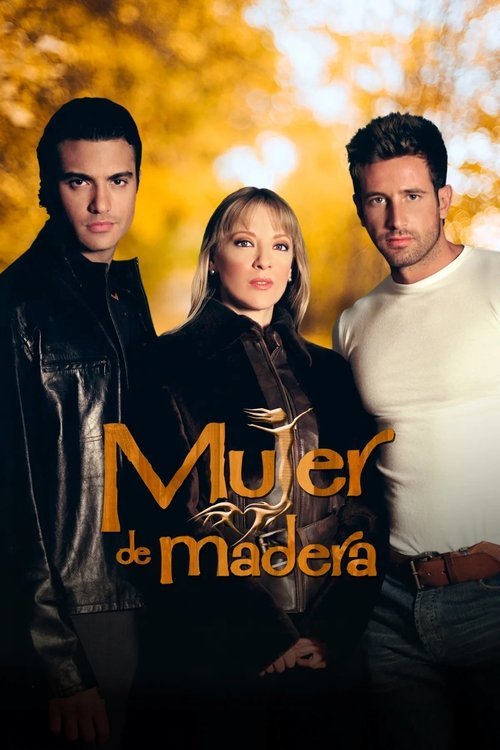
Mujer de Madera is a Mexican telenovela produced by Televisa in 2004. One unusual feature of this telenovela is that the main character is played by different actresses before and after her stay in hospital due to a forest fire.
Mujer de Madera

María del Mar, Marimar, est une jeune mexicaine fleur bleue qui ne sait ni lire ni écrire. Elle vit dans un squat de la plage avec son papi Pancho, sa mamie Cruz, son chien Sac à puces, et sa poule Macha. Contre l'avis de ses grands-parents, elle se rend souvent sur des terrains privés pour récupérer des fruits et des légumes du jardin. Un jour, elle croise le regard de Sergio Santibañez fils du propriétaire de l'Hacienda où elle s'est introduite. Elle est subjuguée par cet homme. Emu par la situation de la jeune femme qui s'accroche à lui, et se sentant en âge de se marier, il propose à Marimar de s'installer à l'Hacienda. Sergio n'est pas amoureux mais ils se marient rapidement car Sergio veut faire rager son père qui refuse de lui attribuer sa part de l'Hacienda. Renato, le père de Sergio et surtout Angelica, la femme de ce dernier regrettent d'avoir poussé Sergio à trouver une épouse. Sergio est footballeur dans un club de la capitale, Mexico. Marimar est vexée de voir que son mari ne souhaite pas qu'elle le rejoigne. Il lui propose de rester à l'Hacienda en attendant qu'il fasse construire une maison non loin de là. Il s'imagine que Marimar sera une parfaite maîtresse de maison à son retour. Il lui envoie des lettres qui ne lui sont pas lues. Marimar est gentille mais elle peut se montrer très insolente avec les gens qui la prennent de haut. Elle se dispute donc régulièrement avec Angelica. Angelica se débarrasse d'elle en l'accusant d'un vol de bijoux. Marimar se retrouve en prison enceinte. Angelica ordonne à un de ses employés de s'occuper des grands-parents de Marimar. Il fait plus que demandé en les tuant. Marimar ne reste pas longtemps en prison. À sa libération elle ne rêve que d'une chose : quitter la région et prendre un nouveau départ. Avec l'aide du prêtre, Padre Porres, elle trouve un logement dans une auberge de Mexico. La poule Macha finit dans les assiettes de l'auberge. Marimar est embauchée comme domestique chez le riche homme d'affaires Gustavo Aldama, qui recherche sa fille. Gustavo va faire d'elle une femme cultivée, distinguée, ambitieuse et son héritière. Ce n'est que la veille de sa mort qu'il apprend que cette jeune femme est en réalité sa fille. Marimar a perdu toute naïveté. À Mexico on la connaît sous l'identité de Bella Aldama, une redoutable femme fatale, orgueilleuse et très méfiante. Elle réussit à cacher sa grossesse, puis élève sa fille en toute discrétion. Sergio tombe amoureux de cette femme d'affaires charismatique. Il a des doutes mais refuse de croire que Marimar ait pu autant changer. Marimar ressent toujours quelque chose pour Sergio mais n'oublie pas le manque de considération de celui-ci à l'époque où elle était pauvre. Elle ne supporte pas la goujaterie de son mari qui semble bien s'amuser à Mexico. Marimar se vante d'être riche, tourne Sergio en bourrique, et souhaite se venger de la famille Santibañez. Le chien Sac à puces, dont on entend les pensées, est bien plus perspicace que les humains. Il essaie de protéger Marimar contre elle-même.
Marimar

When Marichuy was born, her mother—believing she was on the verge of death—handed her over to a priest, who took her to an orphanage. At the age of fourteen, Marichuy ran away from the institution and began wandering from place to place, scraping together a living however she could. Years later, she was attacked by a drunkard; the incident left her harboring resentment toward men and plagued by harrowing nightmares.
Don't Mess with the Angel

María Mercedes, a poor girl who sells lottery tickets, meets a rich man who hates his own family and sees in María Mercedes an opportunity to make their lives miserable.
Maria Mercedes

Il est jeune, beau, intelligent... et c'est un voyou ! Angel Salvador, surnommé "El Diablo" est un des membres éminent du gang "Los Latas" qui sévit dans le Queens à New York. Il vénère sa mère qui ne lui a jamais révélé l'identité de son père, qui les a abandonnés l'un et l'autre il y a 23 ans, et il ferait tout pour elle.
El Diablo

Lola... Érase Una Vez is a teen targeted Mexican melodrama telenovela produced by Televisa that is an adaptation of the Argentine global phenomenon and teenage telenovela Floricienta. The show tells the story of a modern Cinderella, Lola, a 20 year old girl, who works as a nanny and sings in a rock band and meets her so call Prince Charming. It debuted in Mexico on February 26, 2007, starring Aarón Díaz and Eiza González. The show had gained popularity among teens and children not only in Mexico but also internationally including Venezuela, Spain and the in United States. With concert performances filling major auditoriums and songs by the protagonist become radio hits. It debuted in the United States on Univision in March 2008 and ended on January 26, 2009. The series consisted of 224 episodes which aried Monday through Friday at 3 P.M, intentionally for teenagers to watch after school, as is typical for most teenage & children telenovelas in Spanish networks.
Lola… Once Upon a Time

Soccer is the central theme of this fun story, in which Lorena, Paulina, Daniela, and Fernanda learn to face life by tackling the challenges the game presents—both on the field and in love.
The Game of Life

Contra viento y marea is a Mexican telenovela aired from April 25 until November 4, 2005. This was also the last acting role of Beatriz Sheridan, who died in 2006 of a heart attack.
Contra viento y marea

The kidnapping of her son unleashes a storm in Nuria García's life who, in the most difficult moment, meets Santiago Zepeda; together, they find redemption in the face of adversity.
Vuelve a mí

Dans un village nommé la plage des Etoiles vit une jeune fille Estrella Marina, elle a été élevée par ses parrains Aurore et Antoine, une famille de pêcheur car sa mère Cecilia a été victime d'un viol et a complètement perdu la raison. Dans ce même village, un endroit appelé La Pointe des Roches ou vit le puissant et redoutable Léon Barra Montiel avec ses deux filles, l'une qui est aussi arrogante que lui, Orianna et à l'opposé celle qui est douce et gentille, Helena. Après des années d'absence, le jeune Victor Emmanuel Candilice est de retour dans le village. Oriana tente à tout prix de le séduire mais il n'a d'yeux que pour Estrella qui elle aussi s'éprend de lui.
Amour Océan

True love threatens to tear a family apart in this epic Mexican serial set in the 1800s. Rich and beautiful Matilde falls in love with Adolfo, but her mother, Augusta, disapproves of the relationship when she learns Adolfo is poor. Augusta forces her daughter to marry rich and handsome Manuel Fuentes Guerra, but Matilde plays with fire by continuing to be with Adolfo. Adela Noriega, Fernando Colunga, Helena Rojo and Chantal Andere star.
Amor Real

A Salem, deux familles, les Horton et les Brady, vivent paisiblement. Derrière ce calme relatif, de multiples passions couvent et des intrigues se nouent…
Des jours et des vies
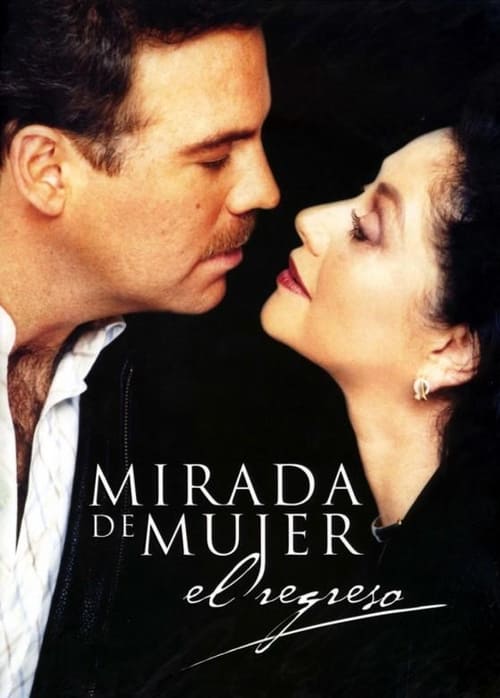
Mirada de mujer: El regreso is a Mexican telenovela, which was produced by and broadcast on TV Azteca in 2003. It is the sequel of Mirada de Mujer.
Mirada de mujer: El regreso

A brave, poor young girl is welcomed into a rich family and develops a romance with their misogynist youngest son, driving a woman already in love with him to go to great lengths to destroy their relationship.
María la del Barrio

Victoria Balvanera owns a vast expanse of land and a prestigious advertising agency. She is married to the landowner Nelson Brizz. Following an attempted kidnapping, she finds love with José Ángel—her rescuer and the estate's new foreman.
Amores verdaderos

Mi Pequeña Traviesa is a Mexican youth and family telenovela produced and directed by Pedro Damián for Televisa and originally broadcast on Canal de las Estrellas from December 8, 1997, to April 24, 1998. It is an adaptation of the Argentine telenovela Me llaman Gorrión, created by Abel Santa Cruz. The telenovela stars Michelle Vieth and Héctor Soberón. The story follows Julia González, a young woman whose dreams of pursuing a professional career are interrupted after her father is left paralyzed in an accident. To support her family, she disguises herself as a boy in order to find work. Along the way, she falls in love with Alberto Miranda, and together they must overcome social differences, family conflicts, and the many obstacles that stand in the way of their happiness.
Mi Pequeña Traviesa

Rebeca murders her sister Adriana to end up with the man she loved, and becomes the step mother of her niece Lucía. Nora, Lucía's half sister and daughter of Rebeca, resents Lucía for the same reasons Rebeca hated Adriana, as history repeats itself.